
HVO in Construction: A Practical Guide to the Diesel Alternative
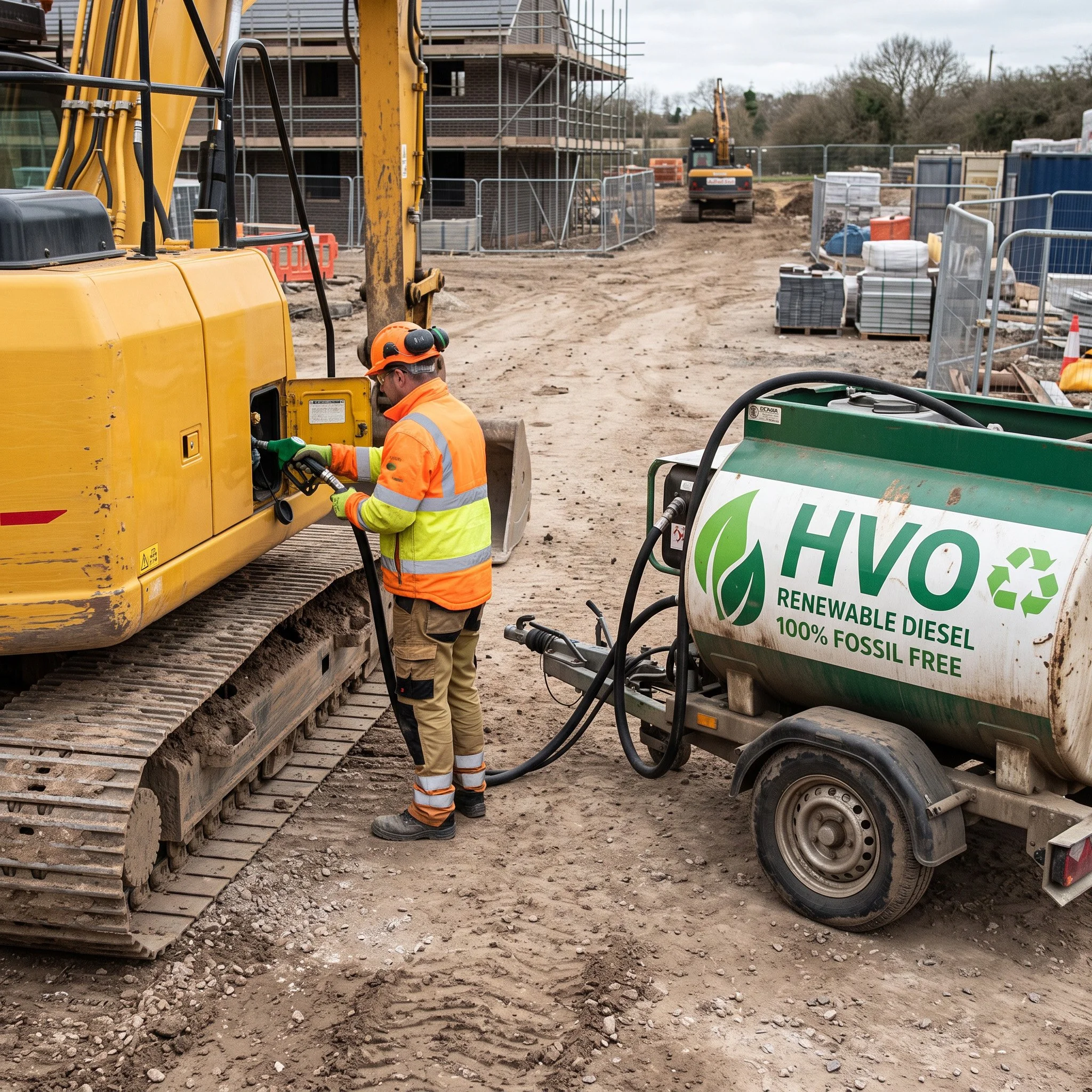
Within the construction industry, fuel is one of the biggest sources of carbon emissions. Governments net zero commitments and growing pressure from clients, highlights the need for this industry to find practical ways to cut those emissions now.
Cleaner options are electric and hydrogen plant, however these are not yet viable for most sites because of cost and limited technology. That has made hydrotreated vegetable oil (HVO) a popular stepping stone fuel. HVO accounted for 21% of verified renewable fuel supplied in the UK in 2024, showcasing it as a significant part of the country's renewable transport fuel supply.
What is HVO?
HVO is a type of biodegradable renewable diesel made by treating oils and fats with hydrogen. Feedstocks include used cooking oil, animal fats and vegetable oils. The result is a fuel that is chemically very similar to fossil diesel.
HVO differs from other biofuels such as FAME (Fatty Acid Methyl Esters). FAME can absorb water leading to microbial growth in storage, cause blockages in cold weather and is not approved for high blends in all engines. HVO avoids these problems and performs well in cold conditions, with some grades of fuel having a cloud point as low as -34°C.
Not all HVO has equal sustainability credentials. Second generation HVO is made from waste products such as used cooking oil and animal fats and is the preferred option. First generation HVO is made from food crops such as palm and soy. Growing these crops can lead to forests being cleared or food farmland being displaced, which releases so much carbon that some crop based biofuels can produce more emissions overall than diesel.
Why construction is looking at HVO
The UK's 2050 net zero target is pushing every industry to measure and reduce its emissions. The Construction Leadership Council is leading the way, setting a target to cut diesel use on construction sites by 78% by 2035. HVO from waste feedstocks can cut lifecycle carbon emissions by up to 90% compared with diesel.
HVO also makes reported emissions easier to reduce. Because its carbon is biogenic (explained further below), its combustion CO2 is not counted in scope 1. Giving companies a straightforward way to cut their reported emissions without buying new equipment or modifying engines.
Client demand is growing too for projects. More clients want emissions reductions on their projects, and HVO should increasingly appear as an option in tenders. Many main contractors have committed to using HVO, with this in mind subcontractors who can match those commitments are more likely to win work.
Air quality is another driver. Studies show HVO can reduce particulate matter and nitrogen oxide (NOx) emissions compared with diesel, which helps sites in cities meet air quality zones and regulations.
Since the red diesel was phased out for construction in 2022, sites now would run on white diesel or diesel blends. With net zero commitments shaping the industry, HVO is widely seen as the next step.
Churngold is committed to reducing carbon emissions and supports clients who want to use HVO in their projects.
Environmental benefits
HVO still releases CO2 when it is burnt, but this is biogenic carbon. When the crops are grown carbon was absorbed from the atmosphere by plants only recently, so burning it returns the same carbon rather than adding new carbon from fossil sources. This creates a loop of recycling carbon in the atmosphere and for this reason, combustion CO2 from HVO is counted as zero in scope 1.
This does not mean HVO is carbon free on paper. Under UK government (DESNZ) and GHG Protocol guidance, the biogenic CO2 is reported separately as "outside of scopes". Emissions from producing and transporting the fuel are reported in scope 3, and small amounts of nitrous oxide from combustion remain in scope 1.
HVO can also burn more cleanly than diesel and FAME, with lower NOx and particulates. The size of the benefit varies, as engine age, maintenance and how the machine is used also affect emissions.
The major carbon saving depends on where the feedstock comes from. HVO should be certified under the UK's Renewable Transport Fuel Obligation (RTFO) and Renewable Fuels Assurance Scheme (RFAS), which confirm the feedstock is a waste product and the emissions saving is genuine.
Compatibility with plant and equipment
HVO meets the EN 15940 standard for paraffinic diesel fuel and is approved by most major engine and plant manufacturers. It is a "drop in" fuel, so it can replace diesel without modifying or flushing the engine. It is still worth checking approval with the manufacturer of each machine.
Because HVO and diesel are interchangeable, switching between them is simple. This reduces supply risk: if HVO is unavailable, a site can switch back to diesel until supply resumes.
HVO also stores well. It is more stable than FAME and resists the water absorption and microbial growth that can affect other biofuels. Suppliers quote a shelf life of up to 10 years when stored correctly, which makes it easier to hold stock on site.
Cost and commercial considerations
The main drawback of HVO is its price premium over standard diesel. The gap has narrowed as use has grown, but HVO remains more expensive because production costs are high and the supply chain is still developing. Large amounts of HVO used in the UK is imported from the Netherlands, Singapore and the USA, with the shipping industry increasingly competing for the same feedstocks.
How you buy HVO affects both price and reliability:
Long-term supplier partnerships can secure better prices and priority supply during shortages.
Bulk purchasing can reduce the cost per litre.
Spot buying lets you buy when prices are favourable, if you have storage on site.
Supply chain and sustainability concerns
HVO is only as sustainable as its feedstock. Only HVO made from waste should be bought. This is because crop based HVO, especially from palm and soy, can produce higher emissions than diesel once land use change is taken into account.
To avoid fraud and tracing issues when supplying HVO from foreign imports, that has previously been experienced in the UK, certification is the main safeguard. Buyers should:
Buy only from RFAS approved suppliers.
Request a Renewable Fuel Declaration (RFD) for every batch, which shows the feedstock, its origin and the carbon saving.
Add HVO to their procurement risk register.
Check supplier certificates on the ISCC database.
HVO as a transition fuel
HVO is a bridge to longer term, zero emission solutions rather than the final answer. Electric and hydrogen plant will play a bigger role in future, but they are still developing and needing significant investment before they are feasible and practical for everyday use on site.
In the meantime, HVO is the most practical biofuel for construction. It cuts emissions immediately, works in existing equipment, and costs far less to adopt than replacing a fleet. For contractors looking to reduce their carbon footprint today, it is a realistic first step.
Talk to our team
Looking to reduce the environmental impact of your next construction project? At Churngold, we recognise the importance of finding practical, sustainable solutions that deliver real results. We are committed to reducing carbon emissions across our operations and working collaboratively with clients to explore cleaner alternatives, including HVO, wherever appropriate. If you’re planning a project and want to work with a contractor that takes sustainability seriously, get in touch with our team to discuss how we can support your goals.