
The Building Safety Levy: What It Means for Developers
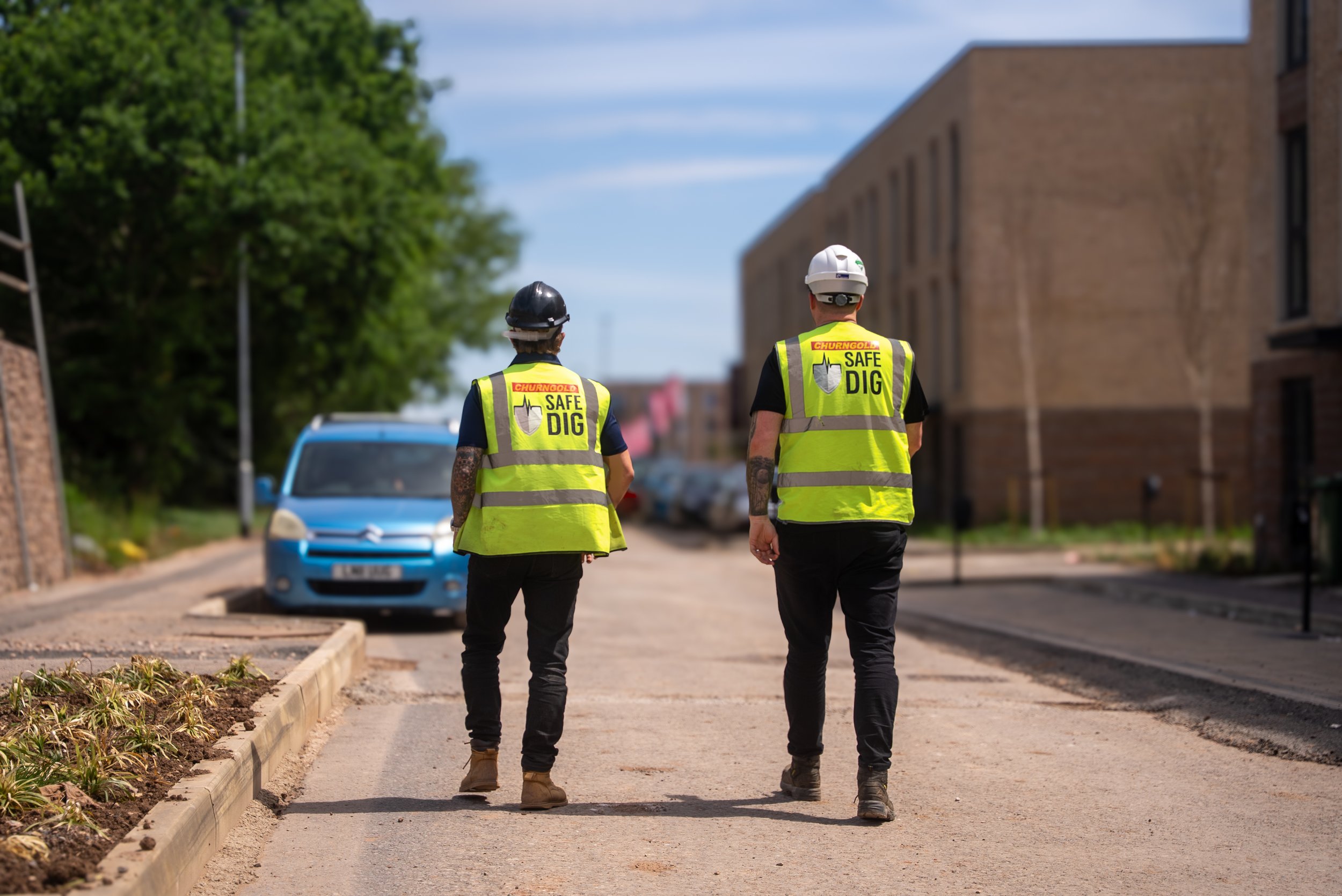
From 1 October 2026, every major residential development in England will carry a new cost. The Building Safety Levy adds a per square metre charge to every building control application for schemes of 10 or more dwellings, and there are no transitional provisions for projects that have not yet submitted their applications.
If you are a developer, project manager, or quantity surveyor working on residential or mixed-use schemes, this guide explains what the levy is, how it is calculated, which projects are affected, and what it means for your groundworks and enabling works procurement.
What is the Building Safety Levy?
The Building Safety Levy is a charge on new residential developments in England, introduced under Section 58 of the Building Safety Act 2022. Its purpose is to fund the remediation of building safety defects, specifically the removal and replacement of unsafe cladding and other fire safety issues in existing residential buildings.
The levy is designed to ensure that the residential development industry contributes to fixing historic building safety failures. The government aims to raise £3.4 billion over 10 years through the levy, supplementing other remediation funding sources including the Residential Property Developer Tax and voluntary self-remediation commitments from major housebuilders.
The levy applies to England only. Scotland has announced a separate Scottish Building Safety Levy planned for April 2028. Wales has not confirmed equivalent legislation at the time of writing.
Who pays the levy and when?
The developer named as the client on the building control application is liable for the levy. This is the person or organisation that submits the full plans application to the local authority, the application to the Building Safety Regulator for higher-risk buildings, or the initial notice via a Registered Building Control Approver.
The collection and payment process works as follows:
The developer submits levy information during the building control application
A levy liability notice is issued when the developer submits a commencement notice
The local authority calculates the levy amount within five weeks of receiving the required information
Payment must be made before the earliest of occupation or completion of the development
The local authority cannot issue a completion certificate, and must reject any final certificate, until the levy has been paid in full
This last point is critical. If the levy remains unpaid, the building cannot be formally completed or legally occupied. On a development with presale commitments and contractual completion deadlines, a delayed levy payment could hold up the entire handover programme.
Local authorities collect the levy and transfer the revenue to central government quarterly.
Which projects are affected?
The levy applies to building control applications and initial notices submitted on or after 1 October 2026 for major residential developments. A development is classified as major if it creates:
10 or more new dwellings, or
30 or more new bedspaces in purpose-built student accommodation
This includes new build, conversion, and change of use to residential purposes. Mixed-use schemes that include residential floorspace are also in scope.
Applications submitted before 1 October 2026 are not subject to the levy, even if they are varied or amended after that date. This has created a window for developers to bring forward building control submissions ahead of the deadline, though this is only possible where designs are sufficiently advanced.
Exemptions
The following types of development are exempt from the levy:
Developments of fewer than 10 dwellings (or fewer than 30 PBSA bedspaces)
Affordable housing
Social housing built by non-profit registered providers and their wholly owned subsidiaries
Care homes and supported housing (except private tenure supported housing)
Hospices, NHS hospitals, and other healthcare facilities
Domestic abuse shelters
Accommodation for armed services personnel
Criminal justice accommodation
Children's homes
Even where a development is exempt, the developer may still need to provide evidence of exemption to the collecting authority.
How the levy affects development costs
The levy is calculated per square metre of gross internal area (GIA) of chargeable residential floorspace. This includes communal areas within residential buildings such as lobbies, corridors, and shared amenity spaces.
Rates are set nationally by government for each local authority area. They are based on average house prices within each authority, so areas with higher property values pay higher rates. The range across England is significant:
| Local Authority | Region | Greenfield Rate (per m²) | Brownfield Rate (per m²) |
|---|---|---|---|
| Kensington and Chelsea (highest in England) | London | £100.35 | £50.17 |
| Bristol | South West | £42.97 | £21.48 |
| Bath and North East Somerset | South West | £39.20 | £19.60 |
| South Gloucestershire | South West | £35.54 | £17.77 |
| East Devon | Devon | £34.06 | £17.03 |
| North Somerset | South West | £32.18 | £16.09 |
| Exeter | Devon | £32.35 | £16.17 |
| South Hams | Devon | £31.42 | £15.71 |
| Teignbridge | Devon | £29.78 | £14.89 |
| West Devon | Devon | £29.61 | £14.80 |
| Birmingham | Midlands | £29.23 | £14.62 |
| Mid Devon | Devon | £26.98 | £13.49 |
| Plymouth | Devon | £24.13 | £12.06 |
| County Durham (lowest in England) | North East | £12.70 | £6.35 |
| Newport, Cardiff, Swansea | South Wales | No levy | No levy |
Source: Schedule 3, The Building Safety Levy (England) Regulations 2025. Rates shown per m² of gross internal area. The levy applies to England only.
Bristol carries the highest brownfield rate in the South West at £21.48 per square metre, nearly double Plymouth at £12.06. Across the Devon corridor, rates range from £17.03 in East Devon down to £12.06 in Plymouth. Birmingham in the Midlands sits at £14.62.
For a 200-unit residential scheme with an average unit size of 75 square metres, the levy cost in Bristol at the greenfield rate would be approximately £645,000. On a qualifying brownfield site, that figure drops to approximately £322,000.
Cross-border projects: England, Wales, and Scotland
The Building Safety Levy applies to England only. This creates a direct cost asymmetry for developers and main contractors operating across the Severn corridor, where many schemes straddle the English and Welsh markets.
A residential development in Bristol attracts a brownfield levy of £21.48 per square metre. An identical scheme across the border in Newport, Cardiff, or Swansea attracts no levy at all. Welsh local authorities have no building safety levy rates and no equivalent legislation has been announced.
Scotland has announced its own Scottish Building Safety Levy from April 2027, but the rates and structure have not yet been published.
For developers comparing sites on either side of the border, or for main contractors managing supply chains across both jurisdictions, the levy creates a new variable in the cost equation. It does not change the below-ground work itself, but it does change the financial context in which that work is procured.
The brownfield discount
A 50% discount on the standard rate applies to developments on previously developed land. To qualify, at least 75% of the land within the planning permission boundary must meet the definition of previously developed land under the regulations.
This discount is intended to reflect the higher construction costs associated with brownfield development and to incentivise regeneration. For developers working on former industrial, commercial, or institutional sites, the brownfield discount materially reduces the levy liability. On a Bristol brownfield scheme, the saving is approximately £21.49 per square metre of residential floorspace compared to the greenfield rate.
However, claiming the discount requires evidence that the land qualifies as previously developed. Developers should confirm this classification early in the planning process to ensure the discount is factored into viability assessments and cost plans.
Interaction with other charges
The Building Safety Levy is entirely separate from the Community Infrastructure Levy (CIL) and Section 106 (S106) obligations. Developers may be required to pay all three on the same scheme. The levy is linked to the building control process, not planning permission, which means it is triggered at a different point in the development programme from CIL or S106.
Rates are not indexed annually. They are reviewed every three years through new regulations, which means changes may come in larger, less predictable adjustments rather than gradual annual increases.
What does this mean for groundworks and enabling works?
Churngold is not liable for the Building Safety Levy. The charge falls on the developer. But the levy has practical implications for how developers procure and manage their groundworks, enabling works, and civil engineering.
Cost certainty becomes more important
The levy adds a fixed, non-negotiable cost to every qualifying residential project. When budgets are tighter, developers look harder at the costs they can control. Groundworks and enabling works packages are typically the largest pre-construction spend items, and they are the area where cost overruns most commonly occur, particularly on brownfield sites with contamination or complex ground conditions.
Accurate ground investigation, thorough site characterisation during the enabling works phase, and realistic pricing based on known conditions rather than assumptions all reduce the risk of variations that push total project costs beyond the viability threshold.
Early contractor involvement matters more
When the levy reduces the margin available for the rest of the construction programme, the value of early contractor involvement increases. A specialist groundworks and enabling works contractor involved during the pre-construction phase can identify buildability issues, flag ground risks, and propose value engineering solutions before the main build cost plan is finalised.
This is particularly relevant on brownfield sites where the developer needs to confirm the 75% previously developed land threshold to qualify for the levy discount. Remediationscope, ground investigation findings, and site clearance requirements all feed into the evidence needed to support that classification.
Brownfield development becomes more attractive
The 50% brownfield discount creates a financial incentive that goes beyond the levy itself. For developers comparing greenfield and brownfield options, the levy discount strengthens the commercial case for brownfield remediationand regeneration, particularly in higher-rate local authority areas.
This benefits contractors with genuine brownfield capability. Delivering remediation, enabling works, and groundworks as an integrated package on a brownfield site is not just an operational advantage. It is now a route to a measurable cost saving for the developer, which makes the contractor's brownfield expertise part of the project's commercial equation.
How developers can prepare
The levy comes into effect on 1 October 2026. Developers with projects in the pipeline should be taking steps now to understand their exposure and plan accordingly.
1. Check your building control submission timeline
Applications submitted before 1 October 2026 are not subject to the levy. If your design is sufficiently advanced to submit a full plans application or initial notice before that date, doing so avoids the levy entirely. This is a time-limited opportunity that requires coordination between the design team, building control, and the appointed contractor.
2. Confirm your brownfield classification early
If your site qualifies as previously developed land, you are entitled to a 50% discount on the levy rate. The 75% threshold means the classification needs to be confirmed with evidence. Ground investigation reports, contamination assessments, and site history documentation all support this. Engage with your enabling works contractor and environmental consultants early to build the evidence base.
3. Factor the levy into your cost plan from day one
The levy is a known cost with published rates. There is no reason for it to appear as a surprise later in the programme. Include it as a line item in your development appraisal alongside CIL and S106 obligations. If the levy pushes a scheme close to the viability threshold, it is better to know that before committing to land acquisition than after.
4. Review your groundworks procurement approach
Tighter budgets mean tighter programmes. Consider whether an integrated approach to enabling works and groundworks [→ /insights/enabling-works-vs-groundworks], delivered by a single contractor with experience across both packages, offers better cost certainty and programme resilience than splitting the works across multiple appointments. On brownfield sites in particular, a contractor who can deliver remediation, site preparation, and foundations as a single package reduces interface risk and keeps the programme moving.
5. Understand the payment trigger
The levy is not due at planning stage. It is triggered by the building control process and must be paid before occupation or completion. Make sure your cash flow projections account for this payment timing, and that your construction programme does not assume completion certificates will be issued before the levy is settled.
When to involve us
The Building Safety Levy changes the cost equation for residential development, but it does not change the fundamentals of good groundworks and enabling works delivery. Early engagement with a specialist contractor helps you build cost certainty into your project from the start, manage ground risk effectively, and make informed decisions about site selection and procurement.
Whether you are working on a brownfield remediation scheme that qualifies for the 50% levy discount, a greenfield residential development where the levy needs to be factored into your viability model, or a mixed-use project where only the residential component is in scope, we can help you plan and price the below-ground works with confidence.
Frequently Asked Questions
What is the Building Safety Levy?
The Building Safety Levy is a charge on new residential developments in England, introduced under the Building Safety Act 2022. It applies to building control applications submitted on or after 1 October 2026 and is calculated per square metre of chargeable residential floorspace. The revenue funds the remediation of building safety defects across England.
Who pays the Building Safety Levy?
The developer named as the client on the building control application is liable for the levy. Local authorities collect the payment on behalf of central government. The levy must be paid before a completion certificate or final certificate can be issued.
Which developments are exempt from the Building Safety Levy?
Developments of fewer than 10 dwellings or fewer than 30 purpose-built student accommodation bedspaces are exempt. Other exemptions include affordable housing, social housing built by non-profit registered providers, care homes, hospices, NHS hospitals, supported housing, domestic abuse shelters, and accommodation for armed services personnel.
How much is the Building Safety Levy?
Rates vary by local authority and are set per square metre of gross internal area. They range from £12.70 per square metre in County Durham to £100.35 in Kensington and Chelsea. A 50% discount applies to developments on previously developed (brownfield) land where at least 75% of the site qualifies as brownfield.
Does the Building Safety Levy apply to brownfield sites?
Yes, but brownfield sites attract a 50% discount on the standard levy rate. To qualify, at least 75% of the land within the planning permission boundary must meet the definition of previously developed land. This discount is intended to reflect the higher cost of building on brownfield sites and to encourage regeneration.
When does the Building Safety Levy come into effect?
The Building Safety Levy comes into effect on 1 October 2026 in England. It applies to building control applications and initial notices submitted on or after that date. Applications submitted before 1 October 2026 are not subject to the levy, even if they are varied after that date.
Is the Building Safety Levy separate from CIL and Section 106?
Yes. The Building Safety Levy is entirely separate from the Community Infrastructure Levy and Section 106 agreements. Developers may be required to pay all three on the same development. The levy is linked to the building control process rather than planning permission.
How does the Building Safety Levy affect groundworks and enabling works procurement?
The levy adds a new cost to residential development that developers need to factor into project budgets from the earliest stages. This increases the importance of cost certainty in groundworks and enabling works packages, makes early contractor involvement more valuable for identifying efficiencies, and strengthens the commercial case for brownfield development where remediation expertise can unlock the 50% levy discount.
Talk to our team
Planning a residential or mixed-use development and want to understand how the Building Safety Levy affects your below-ground costs? Whether you need a groundworks package priced with the levy factored in, a remediation-led enabling works programme on a brownfield site, or early contractor input on buildability and cost certainty, we can help. Get in touch to discuss your project.