

Remediation
Contamination in the ground does not announce itself. It shows up in a Phase 2 report, in unexpected lab results, or in a planning condition that locks the entire programme until the site is proven clean.
Churngold delivers remediation works as part of an integrated enabling works and earthworks service. We handle the excavation, treatment, monitoring, and validation that gets contaminated sites back into productive use, working to remediation strategies approved by the local authority and the Environment Agency.
Our Remediation services
Churngold delivers remediation works across a range of contamination types and site conditions. Our scope includes:
Excavation and disposal
Removal of contaminated soils, made ground, and buried structures for disposal at licensed facilities. We manage the full chain: excavation using GPS-guided plant, materials classification, waste carrier coordination, and disposal documentation.
On-site treatment
Where contamination type and site conditions allow, we deliver bioremediation on site, breaking down hydrocarbon contamination through managed biological processes. This reduces the volume of material sent to landfill and can offer significant cost savings on large-volume sites.
Soil stabilisation and containment
Stabilisation binds contaminants within the soil matrix to reduce their mobility and leachability. Containment systems, including capping layers and barrier membranes, isolate contamination from sensitive receptors. Both approaches can be more cost-effective than excavation on sites where removal of large volumes is impractical.
Environmental monitoring
We deliver live environmental monitoring throughout the remediation programme, tracking ground gas, soil vapour, groundwater quality, and dust levels. Monitoring data supports regulatory compliance and provides the evidence base for the validation report.
Materials management under CL:AIRE
Churngold implements Materials Management Plans under the CL:AIRE Definition of Waste: Development Industry Code of Practice. This framework allows suitable excavated materials to be reused on site or moved between sites without being classified as waste, reducing disposal costs and programme impact. Third-party verification at sign-off is provided by independent qualified persons.
Hazardous waste management
We coordinate hazardous waste classification, transport, and disposal through licensed supply chain partners. Sampling and laboratory analysis is led by specialist consultants, with Churngold managing the logistics of segregation, storage, and removal from site.
Ground investigation coordination
Churngold coordinates ground investigation through the supply chain as part of enabling works packages. This includes Phase 1 desk studies and Phase 2 intrusive investigations (boreholes, trial pits, and laboratory testing). The findings from ground investigation directly inform the remediation strategy and method selection.
What are Remediation Works?
Remediation works are the activities carried out to treat, remove, or contain contamination in soil, groundwater, or ground gas so that a development site is safe for its intended use.
On brownfield sites with an industrial or commercial history, contamination is common. Former fuel depots, factories, gasworks, landfills, and military installations can leave behind hydrocarbons, heavy metals, asbestos, volatile organic compounds, and ground gas. Without remediation, these contaminants pose risks to human health, controlled waters, and the built environment.
Remediation works typically form part of an enabling works package and must be completed before foundations and groundworks can begin. The scope is defined by the remediation strategy, which sets out the methods, target levels, monitoring regime, and validation requirements for each contaminant.
How we approach Remediation
Every remediation project follows a sequence: investigate, design, deliver, validate. Churngold typically enters the picture after the ground investigation findings are known and the remediation strategy has been approved.
Our approach is built around three principles.
Integrated delivery
Remediation rarely happens in isolation. It sits within an enabling works programme that includes site clearance, demolition, utility diversions, and earthworks. Appointing a single contractor for the full enabling works package removes the interface risk between remediation and the activities that follow. When Churngold delivers remediation alongside earthworks and groundworks, the transition from contaminated site to clean platform is managed within one programme.
Materials reuse over disposal
Disposal is the most expensive remediation route and the one with the greatest environmental impact. Where site conditions allow, we prioritise on-site treatment and materials reuse under CL:AIRE. This can reduce disposal volumes significantly, with direct savings on waste classification, haulage, and landfill gate fees.
Monitoring that builds the validation case from day one
The validation report is the document that proves the remediation worked. We run environmental monitoring throughout the works, not just at the end, so the evidence base builds progressively. This avoids the common problem of reaching the end of remediation and discovering that monitoring data gaps require additional sampling before the local authority will sign off.

When is Remediation needed?
Remediation is most commonly triggered by a planning condition on a brownfield development. The local authority requires the developer to demonstrate that the site is safe for its intended use before construction can proceed.
The typical triggers include:
Phase 2 ground investigation identifies contamination above screening levels for the proposed end use
Planning conditions require a remediation strategy and validation report before occupation
Environment Agency consultation flags risks to controlled waters (rivers, aquifers)
Building control requires gas protection measures in response to ground gas risk assessments
Regulatory action under Part 2A of the Environmental Protection Act 1990 designates the site as contaminated land
On complex brownfield sites, remediation can account for a significant proportion of the enabling works programme and budget. Delays to remediation delay everything that follows, which is why integrating remediation within the wider enabling works package, rather than procuring it as a standalone workstream, reduces programme risk.
FAQ
-
What are remediation works in construction?
Remediation works are the activities carried out to treat, remove, or contain contamination in soil, groundwater, or ground gas so that a site is safe for its intended use. In construction, remediation typically forms part of an enabling works package and must be completed before foundations and groundworks can begin.
-
What types of contamination require remediation?
Common contaminants include hydrocarbons from fuel storage, heavy metals from industrial processes, asbestos from demolished structures, volatile organic compounds such as chlorinated solvents, and ground gas from landfill or organic material. The type and extent of contamination determines which remediation method is appropriate.
-
How long does site remediation take?
Timescales depend on the contamination type, the volume of affected material, and the method used. A straightforward dig and dispose operation on a small site might take weeks. In situ bioremediation or groundwater treatment on a large industrial site can run for months. Early ground investigation helps establish realistic programme expectations.
-
What is a remediation strategy?
A remediation strategy sets out how contamination on a site will be managed. It defines the objectives, methods, target levels, monitoring regime, and validation requirements. It is typically required as a planning condition and must be approved by the local authority and the Environment Agency before works can begin.
-
What is the difference between remediation and site clearance?
Site clearance removes vegetation, structures, and surface obstructions. Remediation specifically addresses contamination in the ground. A site may need both, and both typically form part of an enabling works package, but they are distinct activities requiring different expertise.
-
Does Churngold carry out ground investigation?
Churngold coordinates ground investigation through its supply chain as part of enabling works packages. This includes Phase 1 desk studies and Phase 2 intrusive investigations. The findings directly inform the remediation strategy and method selection.
-
What is CL:AIRE and how does it relate to remediation?
CL:AIRE publishes the Definition of Waste: Development Industry Code of Practice. This framework allows suitable materials to be reused on site or moved between sites without being classified as waste, reducing disposal costs and environmental impact. Churngold implements Materials Management Plans under this framework.
-
Who is responsible for contaminated land remediation?
Under Part 2A of the Environmental Protection Act 1990, the polluter pays principle applies. In practice, responsibility often falls on the current landowner or the developer. Remediation is typically secured through planning conditions, with the local authority and Environment Agency overseeing compliance.
Case Study Exmouth Junction
Client: Places for People
Project Name: Exmouth Junction
Location: Exeter
Sector: Residential
Project Value: £8.55M
Engineer/Architect: Hydrock/Stantec/BDC/Gould Singleton Architects
Project Period: 134 weeks
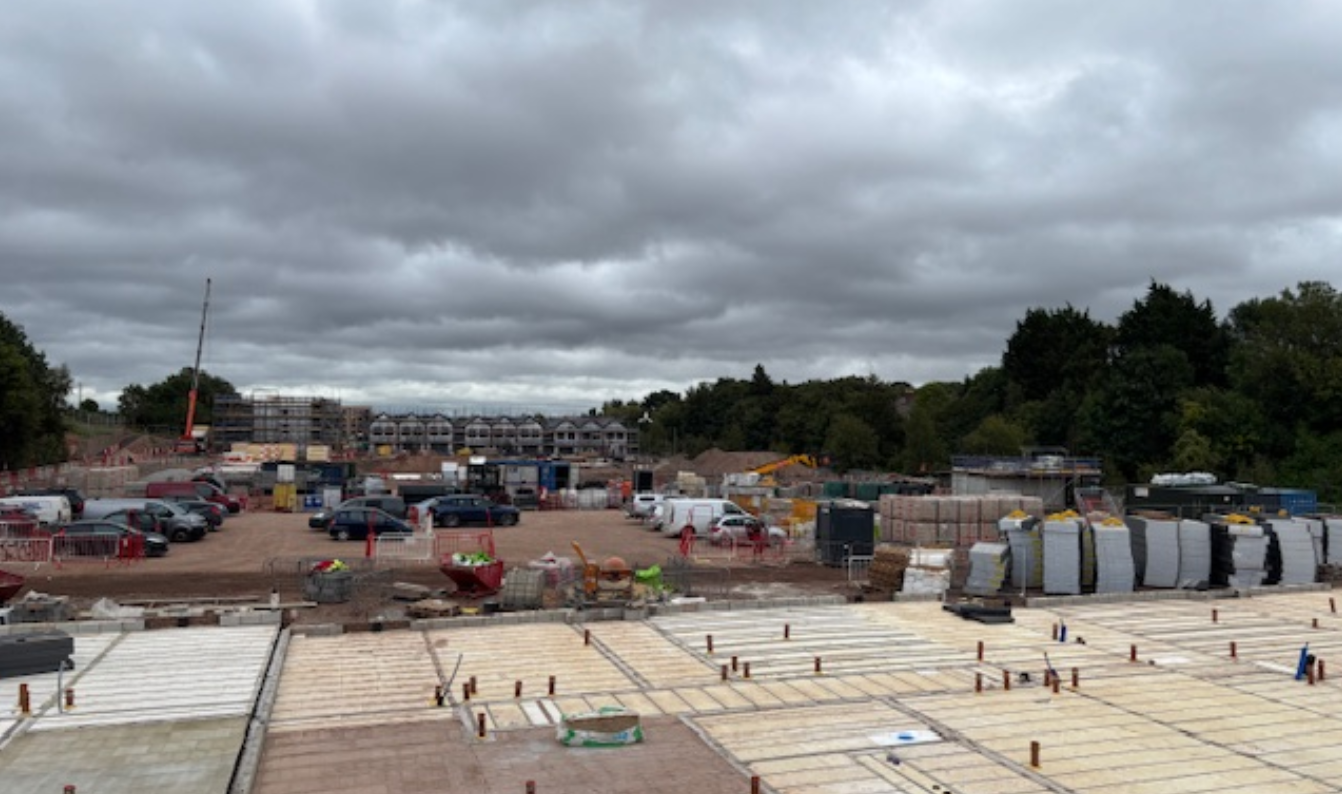
Churngold delivered remediation and enabling works at the former railway depot at Exmouth Junction.
The brownfield site had a complex contamination profile including hydrocarbons, heavy metals, and asbestos in made ground. The scope included excavation and off-site disposal of contaminated soils, environmental monitoring, and materials management under CL:AIRE.
Deployment of circular strategies (WRAP Protocol, MMP etc) to maximise re-use and value of site won materials.
Bulk earthworks utilising suitable site won materials to construct the development platform. Gas monitoring and vapor spike surveys to develop the ground gas risk assessment.
Delivery of all groundworks, drainage, infrastructure and external works to 104 housing plots and 64-unit apartment block.
Key work carried out
Site Clearance
Site Wide Remediation
Materials Management Plan (under CL:AIRE)
Earthworks
Foundations, Drainage & External Works
Churngold successfully managed
Site restrictions – busy major roads on two sides of the site.
Major Rail line on site boundary.
Shared main access with multiple other development sites.
Co-ordination with major sewer diversion works
Delivery of the Remediation, Phased Earthworks and Groundworks phase.

Talk to our Remediation Team
Dealing with contamination on a development site? We can help you scope the remediation works, integrate them within your enabling works programme, and manage the process through to validation sign-off. Get in touch to discuss your project.
Sectors
-

Groundworks
Excavation, foundations drainage installation, and concrete structures.
-

Earthworks
Site levelling, soil stabilisation, and material import/export.
-

Civil Engineering
Infrastructure design, roadworks, drainage systems, and more.
-

Remediation
Remediation works as part of an integrated enabling works and earthworks service.