
Site Clearance in Construction: What's Involved

Site clearance sounds simple. Strip the vegetation, clear the debris, hand over a clean platform. But on a live development project, the clearance phase is where ecological constraints, contamination surprises, and waste management obligations converge, and getting any of them wrong can hold up the entire construction programme.
So what does site clearance actually involve? What should developers and main contractors expect when appointing a specialist, and where does site clearance end and the next phase of work begin? This guide covers the full scope, from first entry to handover.
What is site clearance?
Site clearance is the process of removing all existing vegetation, surface structures, waste, and obstructions from a development site to prepare it for construction. It is typically the first physical activity on a project and forms part of the wider enabling works package.
The purpose is straightforward: create a safe, accessible, and unobstructed platform so that the next phase of work, whether that is ground investigation, remediation, earthworks, or groundworks, can proceed without delay.
On a clean greenfield site, clearance might involve little more than stripping vegetation and removing hedgerows. On a brownfield site with a complex industrial history, the clearance programme can run for weeks or months and involve dozens of interdependent activities, each with its own regulatory requirements and lead times.
Site clearance is not the same as demolition, although demolition often forms part of a clearance package. And it is not the same as earthworks or remediation, both of which typically begin after the site has been cleared. Understanding where the boundaries sit is important for procurement, programming, and contract scope.
What does site clearance include?
The scope of a site clearance package varies by project, but a comprehensive clearance programme typically covers:
Vegetation removal
Clearing trees, scrub, hedgerows, grass, and invasive species from the development footprint. This includes stump grinding and root removal where trees have been felled. Vegetation clearance is often the activity most affected by ecological constraints, particularly during bird nesting season (March to August) and where protected species are present.
Surface debris and fly-tipped waste
Removing rubble, waste materials, abandoned items, and any surface debris left from previous uses. On brownfield sites, this can include significant volumes of construction and demolition waste from earlier phases of development.
Redundant structures and hardstanding
Taking out boundary walls, fencing, gate posts, footings, slabs, kerbs, and areas of hardstanding that are not being retained. Where structures are minor (walls, bases, slabs), this typically sits within the clearance package. Where they are substantial buildings, the work becomes demolition and may require a separate method statement.
Utility disconnections and service identification
Identifying and marking the location of existing services (gas, water, electricity, telecoms, drainage) before any ground-breaking work begins. Live services need to be disconnected or diverted before clearance can proceed safely. This requires coordination with statutory undertakers, and lead times can be considerable.
Asbestos identification and removal
On brownfield sites and sites with pre-existing structures, an asbestos refurbishment and demolition survey is typically required before clearance begins. Any asbestos-containing materials must be removed by a licensed contractor before general clearance work can proceed.
Topsoil strip and stockpiling
Stripping and stockpiling topsoil for later reuse in landscaping. This activity sits on the boundary between site clearance and earthworks and is often the last clearance task before the earthworks contractor mobilises. Topsoil stockpiles need to be managed to prevent compaction and contamination.
Hoarding, fencing, and site security
Establishing the site boundary with hoarding or Heras fencing, installing access gates, and setting up site security measures. On urban sites, hoarding is often the first activity and remains in place throughout the construction programme.
Site clearance vs demolition
Site clearance and demolition are related but distinct activities. The confusion is understandable because they often appear together in the same contract, but they carry different risk profiles, regulatory requirements, and procurement considerations.
Site clearance covers the removal of vegetation, surface debris, minor structures, hardstanding, and waste. It prepares the ground surface for the next phase of work.
Demolition is the systematic dismantling or destruction of buildings and significant structures. It requires a pre-demolition asbestos survey, a demolition method statement, and typically a separate CDM notification to the HSE. On some projects, demolition is a standalone contract awarded to a specialist demolition contractor before the enabling works team mobilises.
On many projects, the two overlap. A site clearance package on a brownfield scheme might include the removal of single-storey outbuildings, concrete bases, and below-ground structures that do not require a full demolition methodology. The contract scope needs to define clearly where clearance ends and demolition begins, because the cost, risk, and programme implications are different.
| Activity | Sits Within | Key Difference |
|---|---|---|
| Vegetation clearance | Site clearance | Removal of trees, scrub, hedgerows, and ground cover. Subject to ecological and seasonal constraints. |
| Demolition | Can sit within site clearance or as a separate package | Structural dismantling of buildings. Requires method statement, asbestos survey, and often separate CDM notification. |
| Topsoil strip | Site clearance or earthworks | Removal and stockpiling of topsoil. Often the boundary between clearance and earthworks depending on contract structure. |
| Remediation | Enabling works (separate from site clearance) | Treatment or removal of contaminated soil and groundwater. Follows site clearance but may overlap on phased programmes. |
| Bulk excavation | Earthworks or groundworks | Excavation to formation level. Begins after site clearance is complete in the relevant zone. |
Environmental and ecological considerations
Site clearance is one of the most ecologically sensitive phases of a construction project. The removal of vegetation, trees, and ground cover directly affects habitats, and the timing and method of clearance are often constrained by ecological requirements.
Protected species
Before clearance begins, ecological surveys are typically required to establish whether protected species are present. The most common requirements include:
Great crested newt surveys (typically April to June)
Bat surveys for trees and structures with roosting potential
Breeding bird checks (nesting season March to August)
Reptile surveys where suitable habitat exists
Badger sett surveys
If protected species are found, mitigation measures must be agreed with Natural England and implemented before clearance can proceed. This can include translocation programmes, exclusion fencing, creation of receptor habitats, and seasonal working restrictions that materially affect the clearance programme.
Tree protection
Trees subject to Tree Preservation Orders (TPOs) or within conservation areas cannot be removed without consent. Where trees are being retained adjacent to the clearance area, root protection zones must be established and maintained throughout the works. Tree protection is typically governed by a condition attached to the planning permission, and the arboricultural method statement needs to be in place before clearance starts.
Invasive species
Japanese knotweed, giant hogweed, and Himalayan balsam are the most commonly encountered invasive species on development sites. Their presence affects how cleared material can be handled, transported, and disposed of. Japanese knotweed in particular requires specialist treatment and controlled disposal under the Environmental Protection Act.
Waste management during site clearance
Every material removed from a site during clearance is classified as waste until proven otherwise. The waste duty of care applies to the contractor from the point of removal, and proper classification, segregation, and documentation are legal requirements, not optional good practice.
Waste classification
Cleared materials must be classified correctly before disposal. The main categories are:
Inert waste: clean soil, concrete, brick, stone, and similar materials that do not undergo significant physical, chemical, or biological change
Non-hazardous waste: mixed construction waste, timber, plastics, and metals that are not inert but do not pose a specific hazard
Hazardous waste: materials containing asbestos, contaminated soils, oils, chemicals, and other substances classified as hazardous under the regulations
Misclassifying waste is a common and costly error. If material classified as inert turns out to contain contamination, the receiving facility can reject the load, the disposal cost increases significantly, and the contractor may face enforcement action.
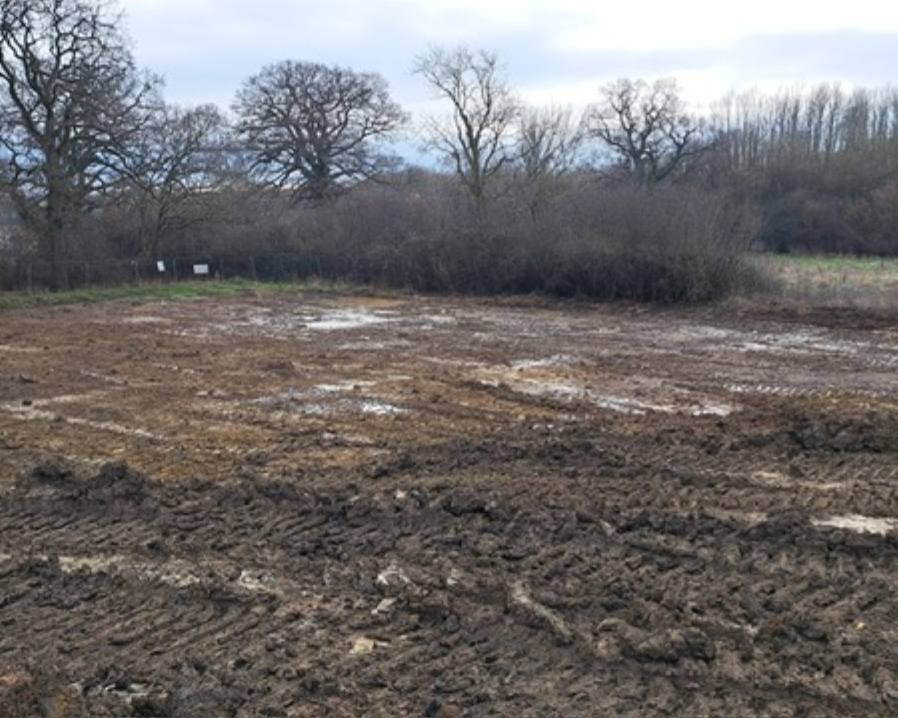
Project example: Hilltop Park, Bloor Homes
Churngold delivered site clearance and enabling works at Hilltop Park for Bloor Homes. Accurate waste classification during the clearance phase was critical to managing disposal costs and programme. Materials were classified on site before removal, reducing the volume sent to landfill and ensuring compliance with the waste duty of care throughout the clearance programme.
Reuse and recycling
Maximising the reuse and recycling of cleared materials reduces disposal costs and supports the project's environmental performance. Common approaches include:
Crushing concrete and masonry for reuse as aggregate or fill material
Segregating timber, metals, and plastics for off-site recycling
Stockpiling clean topsoil and subsoil for reuse in landscaping and earthworks
Using a Materials Management Plan (MMP) to demonstrate that excavated materials meet the definition of non-waste and can be reused on site without a waste permit
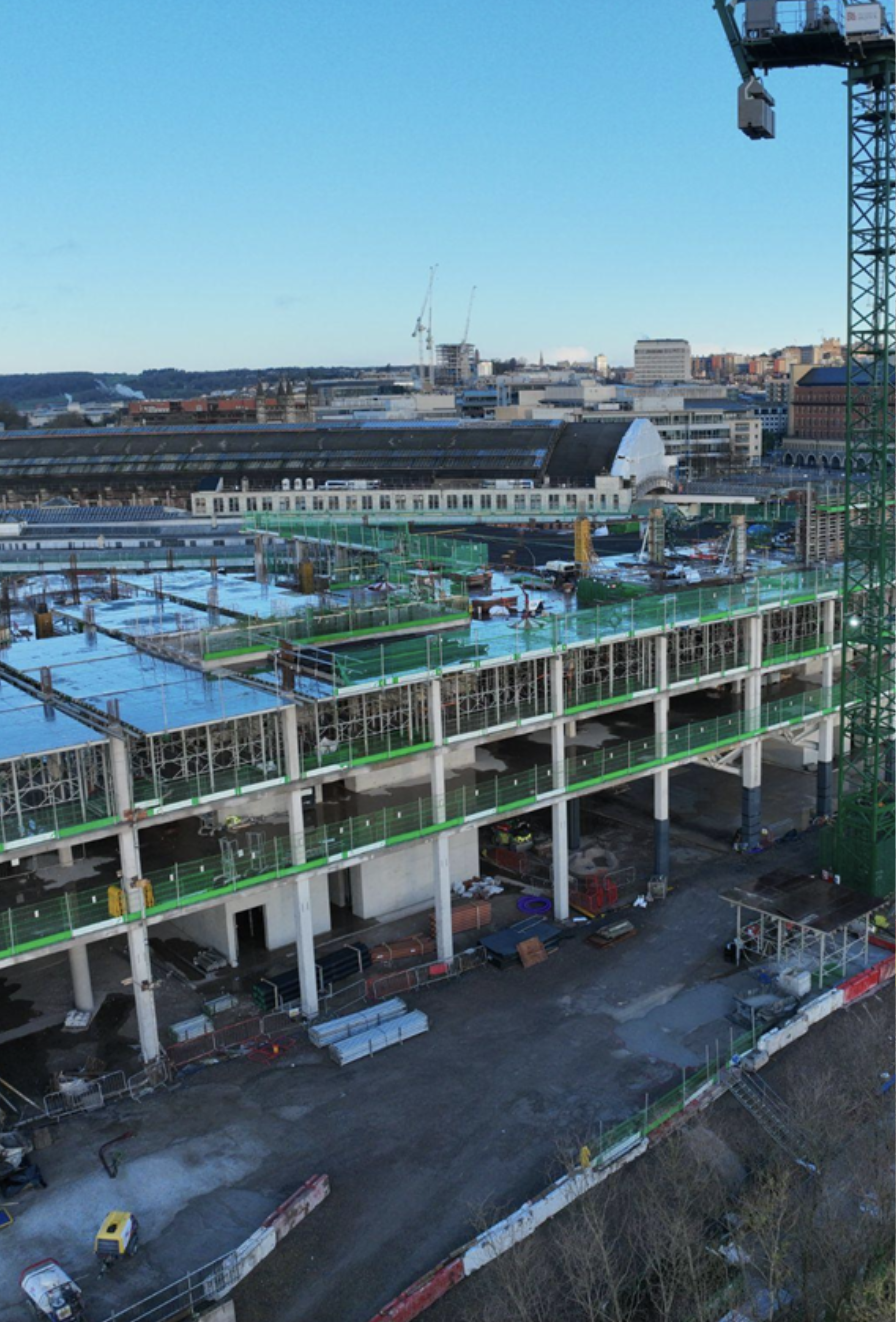
Project example: TQA1
At TQA1, Churngold used a Materials Management Plan alongside a cut and fill model to manage excavated materials on site. This approach reduced off-site disposal volumes and kept material movements within the site boundary, supporting both programme efficiency and environmental compliance.
How long does site clearance take?
There is no standard duration for site clearance. The programme is driven by the site conditions, not the physical clearance work itself.
A straightforward greenfield clearance, involving vegetation strip, boundary fencing, and topsoil removal on a site with no ecological constraints, might take one to two weeks.
A complex brownfield clearance, involving asbestos removal, demolition of existing structures, invasive species treatment, service disconnections, ecological mitigation, and waste classification across a multi-hectare site, can take several months.
The activities that most commonly extend the clearance programme are:
Ecological survey windows and seasonal restrictions (nesting season, hibernation periods)
Asbestos survey and licensed removal works
Statutory undertaker lead times for service disconnections and diversions
Discharge of pre-commencement planning conditions
Discovery of unexpected contamination or buried structures
Early engagement with the clearance contractor during the pre-construction phase helps identify these lead times before they become the critical path.
Planning and sequencing site clearance
Site clearance is not a standalone activity. It sits at the front of the enabling works programmeand its completion triggers the start of the next phase, whether that is ground investigation, remediation, earthworks, or groundworks.
The sequencing of clearance activities matters because many of them have dependencies:
Ecological surveys must be completed before vegetation clearance can begin
Asbestos surveys must be completed before any structure is disturbed
Services must be identified and disconnected before ground-breaking work starts
Tree protection measures must be in place before machinery operates near retained trees
Planning conditions related to clearance must be discharged before work begins
On phased developments, clearance does not happen in one block. Different zones are cleared in sequence, with earthworks or groundworks following closely behind in completed areas. This phased approach keeps the overall programme moving but requires careful coordination to avoid one team's operations creating access or safety issues for another.
The handover between site clearance and the next phase also needs to be defined. What condition will the cleared surface be left in? What levels? What documentation (waste transfer notes, ecological compliance records, service disconnection confirmations) needs to be handed over? A clean handover avoids rework and disputes.
When to involve a specialist contractor
Site clearance is not always a specialist appointment. On a simple greenfield site, the main contractor or groundworks contractor can often handle the clearance as part of their mobilisation.
A specialist enabling works contractor adds value when:
The site has a brownfield history with contamination risk, buried structures, or asbestos
Protected species or significant ecological constraints are present
Demolition of existing buildings forms part of the clearance scope
The site involves live services that need to be identified, disconnected, or diverted
Waste volumes are significant and require careful classification and disposal management
Pre-commencement planning conditions need to be managed as part of the clearance programme
The developer needs a single point of accountability from clearance through to groundworks
On complex sites, the clearance contractor is often the first organisation to encounter the actual ground conditions. Their findings, from unexpected contamination to uncharted services to ecological discoveries, feed directly into the scope and pricing of every package that follows. Getting this phase right, with accurate reporting and proper documentation, sets the project up for a clean transition into the main works.
Frequently Asked Questions
What is site clearance in construction?
Site clearance is the process of removing all existing structures, vegetation, waste, and obstructions from a site to prepare it for construction. It is typically the first physical activity on a development project and forms part of the wider enabling works package.
What is the difference between site clearance and demolition?
Site clearance covers the removal of vegetation, surface debris, redundant services, hardstanding, and minor structures. Demolition refers specifically to the dismantling or destruction of buildings and significant structures, which requires separate planning, structural assessment, and often a demolition method statement. On many projects, demolition forms part of the wider site clearance programme.
How long does site clearance take?
Site clearance duration depends on the site size, condition, and constraints. A straightforward greenfield clearance might take one to two weeks. A complex brownfield site with contamination, ecological constraints, buried services, and planning conditions to discharge can take several months. The programme is driven by the site conditions, not just the physical clearance work.
Do I need planning permission for site clearance?
Site clearance itself does not usually require separate planning permission, but the development it enables will. Pre-commencement planning conditions often need to be discharged before clearance can begin, including ecological surveys, tree protection plans, and contamination assessments. Demolition within a conservation area requires conservation area consent.
What ecological surveys are needed before site clearance?
The surveys required depend on the site and its habitats. Common requirements include surveys for great crested newts, bats, breeding birds, reptiles, and badgers. Vegetation clearance is typically restricted during bird nesting season (March to August) unless a pre-clearance check confirms no active nests are present. Ecological mitigation measures must be in place before clearance begins.
Who is responsible for waste management during site clearance?
The contractor carrying out the site clearance is responsible for managing waste in accordance with the waste duty of care. This includes classifying waste correctly, segregating materials for reuse or recycling, using licensed waste carriers and facilities, and maintaining waste transfer documentation.
What does a site clearance contractor do?
A site clearance contractor removes vegetation, trees, hedgerows, surface debris, redundant structures, hardstanding, and buried obstructions to prepare a site for construction. They also manage waste classification and disposal, coordinate ecological mitigation, disconnect or divert utilities, and ensure the site is left in a safe and accessible condition for the next phase of work.
How much does site clearance cost?
Site clearance costs vary widely depending on the size of the site, the volume and type of material to be removed, ecological constraints, contamination, and access conditions. Costs are best established through a site visit and detailed scope of works rather than estimated from standard rates.
Talk to our team
Need a site cleared before your main works begin? Whether it is a straightforward greenfield strip or a complex brownfield clearance with demolition, contamination, and ecological constraints, Churngold delivers site clearance as part of an integrated enabling works package. Get in touch to discuss your project.