
Section 278 Agreements explained: A developer’s guide to Highway Works
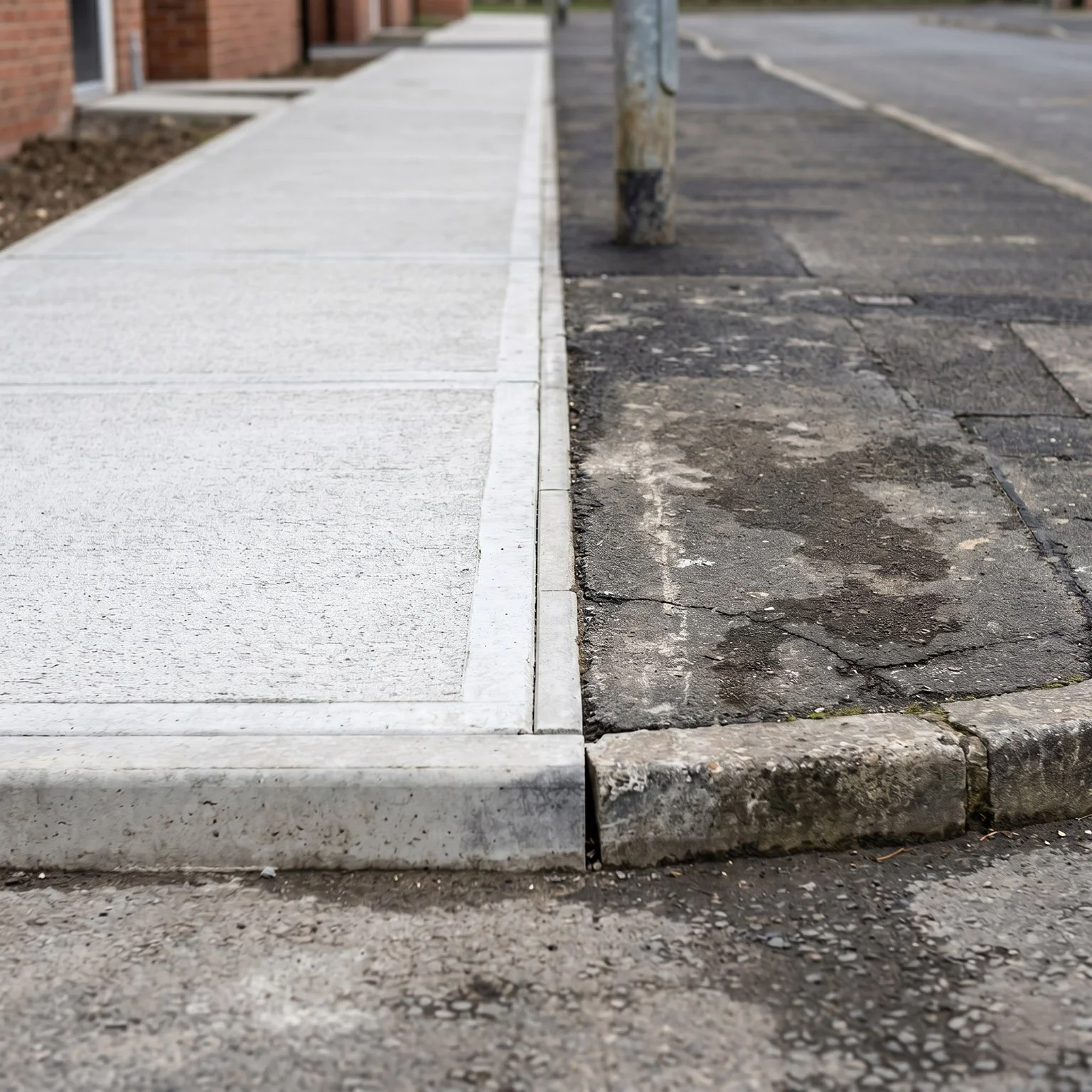
A new junction. A widened road. A pedestrian crossing that was not there before. If your development needs any work on the existing public highway, you are going to need a section 278 agreement before a single kerb is laid.
Get this process wrong and you could be looking at months of programme delay, unexpected costs, and an occupation date that keeps slipping. Get it right, and the highway works slot neatly into the wider construction programme without holding everything else up.
This guide explains what a section 278 agreement is, how the process works from start to finish, what it costs, how it differs from a section 38 agreement, and where a specialist contractor fits into the picture.
What is a Section 278 Agreement?
A section 278 agreement is a legal agreement made under Section 278 of the Highways Act 1980. It allows a developer to carry out works on or adjacent to the existing public highway at their own expense, subject to the approval and oversight of the highway authority.
The highway authority is the body responsible for maintaining the public road network. For most roads, this is the local council. For trunk roads and motorways, it is National Highways.
A section 278 agreement is typically triggered by a planning condition requiring the developer to deliver specific highway improvements before the development can be occupied. In some cases, the requirement comes from a Transport Assessment or a highways agreement negotiated during the planning process.
Common types of work covered by a section 278 agreement include:
Construction of new junctions and access points
Road widening and realignment
Installation of traffic signals and pedestrian crossings
Improved visibility splays
Construction of roundabouts
Footpath and cycleway connections to the existing network
Public realm improvements including paving, drainage, and landscaping
Relocation or protection of highway drainage and utilities
The agreement itself sets out the scope of works, the technical standards the works must meet, the financial bond the developer must provide, the inspection regime, and the process for adoption once the works are complete.
One point that catches developers out: you cannot start any work on the public highway until the section 278 agreement is signed and the bond is in place. This is a legal requirement, not a guideline. Starting without a signed agreement is an offence, and the highway authority can require you to stop and reinstate the highway at your own cost.
The Section 278 process - step by step
The S278 process involves several distinct stages, each with its own lead time. Understanding the full sequence early is the single most important thing a developer can do to avoid programme delays.
Planning condition triggers the requirement. The decision notice specifies that highway works must be completed before occupation, or sometimes before construction above slab level. This is the starting gun for the S278 process.
Appoint a highways design consultant. The developer appoints a specialist transport consultant to prepare the detailed design for submission to the highway authority. This is not a role the construction contractor typically fills.
Submit the detailed design for technical approval. The highway authority reviews the design against its own standards and specifications. This stage alone can take 12 or more weeks, and complex schemes involving signal design or National Highways input can take significantly longer.
Legal drafting begins. The highway authority’s solicitor prepares the S278 agreement document. The developer’s solicitor reviews and negotiates the terms. This runs in parallel with technical approval but cannot complete until the design is approved.
Bond or surety is arranged. The developer provides financial security to the highway authority. This guarantees that if the developer fails to complete the works or correct defects, the authority has funds to finish the job. The bond value is typically set as a percentage of the estimated construction cost.
Agreement is signed. Once the design is approved, the legal terms are agreed, and the bond is in place, the agreement is formally executed. Only now can highway works commence.
Construction begins under an approved contractor. The works must be carried out by a contractor approved by the highway authority. The authority’s inspector visits site during construction to check that the works comply with the approved design and the required standards. Inspection fees are payable by the developer.
Completion and snagging. Once the works are finished, the highway authority carries out a final inspection. Any defects or items that do not meet the required standard are recorded and must be remedied before the authority will accept the works.
Maintenance period. After the authority accepts the completed works, a maintenance period begins, typically 12 months. During this period, the developer remains responsible for any defects that emerge. The bond is held until the maintenance period ends and the authority confirms final sign-off.
From initial design submission to signed agreement, the process typically takes 6 to 12 months. Complex schemes involving National Highways, multiple junction designs, or contested transport assessments can take longer. The critical lesson is to start the process as early as possible, ideally before the planning application is determined, so that the agreement is progressing in parallel with the main site programme rather than sitting on the critical path.
Section 278 vs Section 38: What’s the difference?
These two agreements are frequently confused, and many developments need both. Understanding which applies to which part of the works is essential for procurement and programme planning.
In short: a section 278 agreement covers modifications to the existing public highway. A section 38 agreement covers the construction of entirely new roads that will be offered for adoption by the highway authority.
A housing development with a new junction onto the existing B-road and new estate roads within the site would typically need a section 278 agreement for the junction and a section 38 agreement for the internal roads. The two agreements are separate legal documents with separate bonds, separate inspection regimes, and sometimes separate design consultants.
Table 1: Section 278 vs Section 38 - Comparison
| Factor | Section 278 | Section 38 |
|---|---|---|
| Purpose | Modifications to the existing public highway | Construction of new roads intended for public adoption |
| Legislative basis | Highways Act 1980, Section 278 | Highways Act 1980, Section 38 |
| When needed | New junction onto existing road, road widening, pedestrian crossings, visibility splays, traffic signals | New estate roads, cul-de-sacs, and internal roads within a development intended for adoption |
| Who initiates | Developer, typically triggered by a planning condition | Developer, where roads will be offered for adoption |
| Design approval | Technical approval from highway authority (local or National Highways) | Technical approval from local highway authority |
| Bond required | Yes, based on percentage of estimated works value | Yes, typically higher due to ongoing adoption liability |
| Inspection regime | Highway authority inspects during construction (developer pays inspection fees) | Highway authority inspects during construction (developer pays inspection fees) |
| Adoption process | Works become part of the existing adopted highway on completion | New roads are adopted into the public highway network after maintenance period |
| Maintenance period | Typically 12 months | Typically 12 months, can be longer for complex schemes |
| Common example | New priority junction connecting a development to the B-road | New estate roads, footpaths, and street lighting within a housing scheme |
Where this matters commercially is in the construction programme. The S278 works (the junction) often need to be completed before the S38 works (the estate roads) can be connected. If the S278 agreement is delayed, the entire roads and sewers programme within the site stalls. Developers who treat these as two independent workstreams rather than a connected sequence often discover the dependency too late.
A contractor who delivers both the site civil engineering and the highway works can manage this interface directly. When the junction construction and the internal roads are delivered by the same team, the sequencing sits within one programme rather than relying on coordination between two separate contractors and two separate agreements.
Factors that affect Section 278 costs
Section 278 costs vary significantly depending on the scope, complexity, and location of the works. Rather than quoting figures that may not reflect your scheme, here are the cost categories every developer needs to budget for.
Highway authority fees
The authority charges a technical checking fee for reviewing the design submission, calculated as a percentage of the estimated works value. The percentage varies by authority. On top of this, the authority charges inspection fees for site visits during construction, and legal fees for drafting the agreement. These fees are non-negotiable and must be paid by the developer regardless of the final construction cost.
Construction costs
The cost of the physical works depends on scope. A simple bellmouth junction with dropped kerbs and a short section of footpath is a very different proposition from a signalised junction with traffic signals, pedestrian phases, and road widening. Ground conditions beneath the highway, the need for utility diversions, and traffic management requirements during construction all add cost.
Bond or surety
The bond is set as a percentage of the estimated works value. The exact percentage varies by authority but is typically substantial. The bond ties up capital for the duration of the works plus the maintenance period. Some developers use insurance-backed bonds rather than cash deposits to manage this.
Commuted sums
When the completed works are adopted, the highway authority may require a commuted sum to cover the future maintenance costs of the new infrastructure. Commuted sums apply particularly to features that carry higher ongoing maintenance obligations, such as traffic signals, specialist surfacing, or SuDS drainage features within the highway boundary.
Traffic management
Works on or adjacent to a live highway require traffic management. Temporary traffic signals, lane closures, diversions, and pedestrian management all have associated costs. On busy urban roads, traffic management can represent a significant proportion of the total S278 budget. Night working restrictions or time-limited road closures add further cost.
Utility diversions
If existing utilities run beneath the highway where the new works are planned, they may need to be diverted or protected. Statutory undertaker costs for utility diversions are notoriously difficult to predict and can take months to arrange. Identifying utility clashes early, during the design phase, reduces the risk of costly surprises during construction.
Common pitfalls with Section 278 Agreements
1. Starting too late
The most common mistake. The S278 process takes 6 to 12 months. Developers who wait until planning permission is granted before starting the design submission often find that the highway works become the critical path, holding up the entire development programme. The design work can and should begin before determination.
2. Assuming the planning-stage design is final
The access design submitted with the planning application is often a concept or preliminary layout. The highway authority’s technical approval process frequently requires changes to geometry, visibility splays, signal phasing, or drainage. Budgeting and programming on the assumption that the planning design is the final design is a common source of cost and programme overruns.
3. Underestimating the bond commitment
The bond ties up capital for the full duration of the works plus the 12-month maintenance period. On a scheme where the S278 works take six months to construct, the bond is locked for 18 months minimum. Developers who do not factor this into their cashflow planning can find the bond requirement creating liquidity pressure at exactly the point where the main build programme needs cash.
4. Separating the S278 contractor from the site contractor
Appointing one contractor for the site works and another for the highway works creates a programme interface. If the highway works overrun, the site contractor’s road connection programme is delayed. If the site works generate traffic that conflicts with the highway works, both programmes suffer. A single contractor for both removes this risk.
5. Not budgeting for authority fees and commuted sums
The construction cost is the headline figure, but authority fees, inspection costs, legal fees, the bond, and commuted sums can add a substantial amount on top. Developers who budget only for the physical works and discover the additional costs later find themselves absorbing unplanned expenditure.
When to involve a Specialist Contractor
On many developments, the S278 highway works are procured separately from the main site contract. The developer appoints a highways design consultant to secure technical approval, then tenders the construction works to an approved contractor once the agreement is signed.
This approach works, but it creates interfaces. The design consultant hands a set of approved drawings to a contractor who had no input during the design phase. The highway works contractor mobilises independently of the site contractor. The two programmes run in parallel but are managed separately.
There is an alternative. Appointing a contractor who delivers both the site works (enabling works, groundworks, civil engineering) and the highway works brings the S278 construction into the same programme, under the same project team, with a single point of accountability.
The benefits are practical. The highway works programme is aligned with the site programme from day one. Temporary works, traffic management, and site access are coordinated rather than conflicting. If an issue arises during the highway works that affects the site drainage or service connections, the same team can resolve it without a contract variation passing between two organisations.
Churngold delivers Section 278 highway works directly, as part of an integrated site preparation and civil engineering package. We are not a highways design consultancy, and we do not handle the legal proceedings. But from the point the agreement is signed and construction begins, our team delivers the physical works, manages the authority inspections, and sees the scheme through to adoption. Where our early involvement during pre-construction can add value is in build-ability review: flagging construct-ability issues in the approved design, advising on traffic management sequencing, and aligning the highway works programme with the wider site delivery.
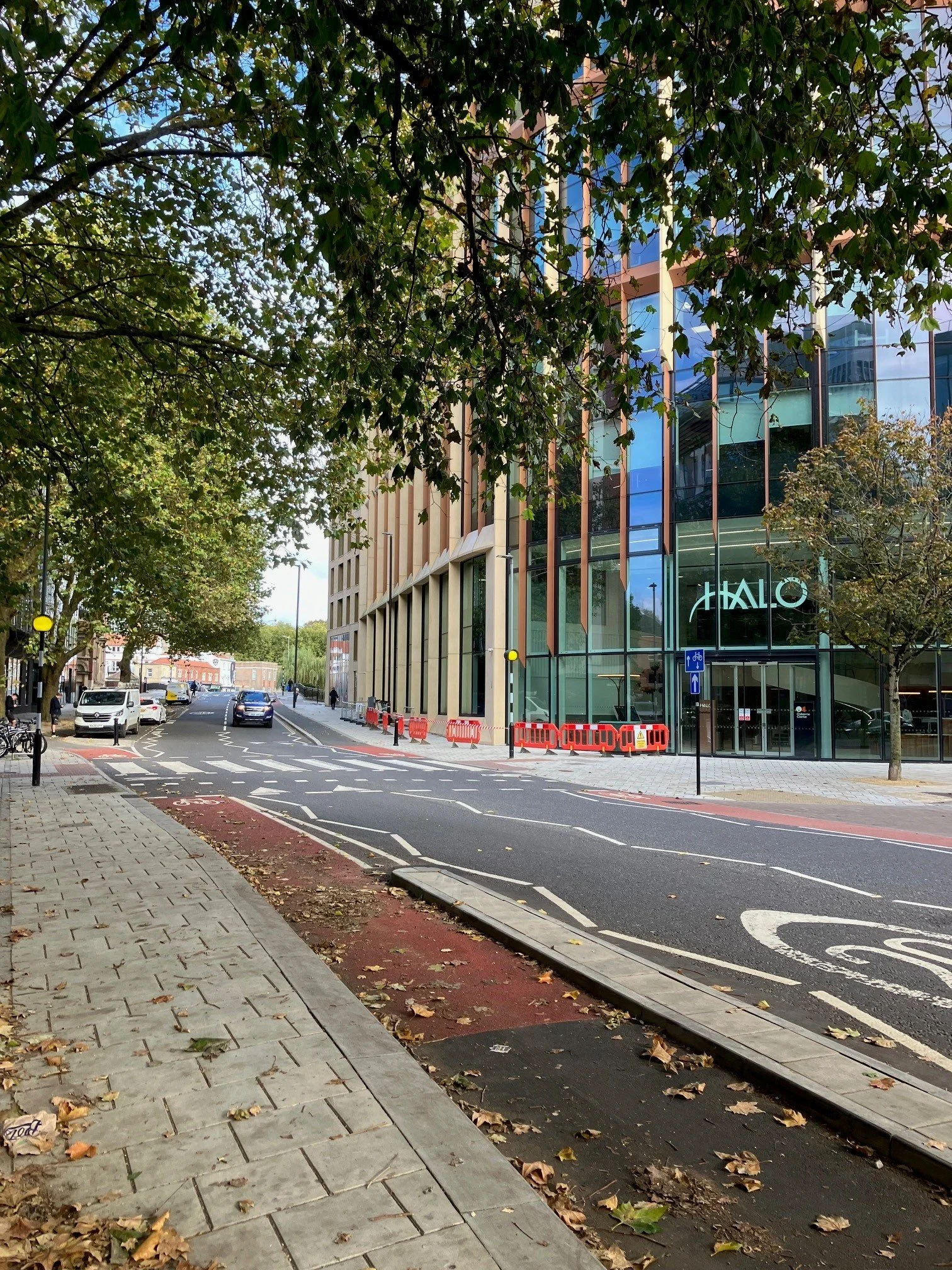
Project example: Halo and Millwrights Place, Finzels Reach, Bristol
Client: Bruton Developments | Engineer: Arup | Value: £2.9M | Duration: 95 weeks
Churngold delivered the Section 278 public realm works at Halo and Millwrights Place in Bristol city centre, serving as Principal Contractor under a JCT 2016 Intermediate Contract. The contract was won through Early Contractor Involvement, a procurement route that mitigated significant cost and time risk for the client.
The scope included pavement and road realignment, drainage, kerbing and paving, service diversions and street lighting installation, new street signage, bridge jointing, tarmac surfacing, and landscaping. Night working was required for many aspects of the programme due to the city centre location.
Churngold managed key stakeholders including Bristol City Council, the client, and residents and businesses affected by the construction works. The works achieved adoption on time.
Frequently Asked Questions
What is a section 278 agreement?
A section 278 agreement is a legal agreement under the Highways Act 1980 between a developer and the highway authority. It allows the developer to carry out works on or adjacent to the existing public highway, such as new junctions, road widening, pedestrian crossings, and visibility splays. The agreement sets out the scope, the bond, and the conditions for adoption.
What is the difference between section 278 and section 38?
Section 278 covers modifications to the existing public highway, such as new access junctions. Section 38 covers the construction of entirely new roads intended for adoption, such as estate roads within a housing development. Many developments need both.
How long does a section 278 agreement take?
The full process from initial design submission to signed agreement typically takes 6 to 12 months. Technical approval of the design can take 12 or more weeks. Legal drafting and bond arrangement add further time. Starting early is essential to avoid programme delays.
Who pays for section 278 works?
The developer pays for all S278 costs, including construction, highway authority checking and inspection fees, legal fees, the bond, and any commuted sums for future maintenance.
What is a section 278 bond?
A section 278 bond is financial security provided by the developer to the highway authority. It guarantees completion of the works if the developer defaults. The bond is typically set as a percentage of the estimated works value and released after the maintenance period ends.
Can I start building before the section 278 is signed?
No. Highway works cannot commence until the agreement is signed and the bond is in place. Starting without a signed agreement is an offence. The highway authority can require you to stop work and reinstate the highway at your cost.
Do I need a section 278 agreement for a dropped kerb?
A standard residential dropped kerb for vehicle access typically falls under a simpler section 184 licence. However, if the access involves more substantial highway modifications such as a bellmouth junction, changes to road markings, or drainage alterations, a section 278 agreement may be required. The highway authority determines which process applies.
Who can carry out section 278 works?
S278 works must be carried out by a contractor approved by the highway authority. The authority maintains a list of approved contractors who meet requirements for insurance, competence, and safety management.
Planning a development that involves highway works?
Talk to Churngold before your planning application is submitted. Our team delivers Section 278 highway works directly, as part of an integrated site preparation and civil engineering package. Get in touch to discuss your project.