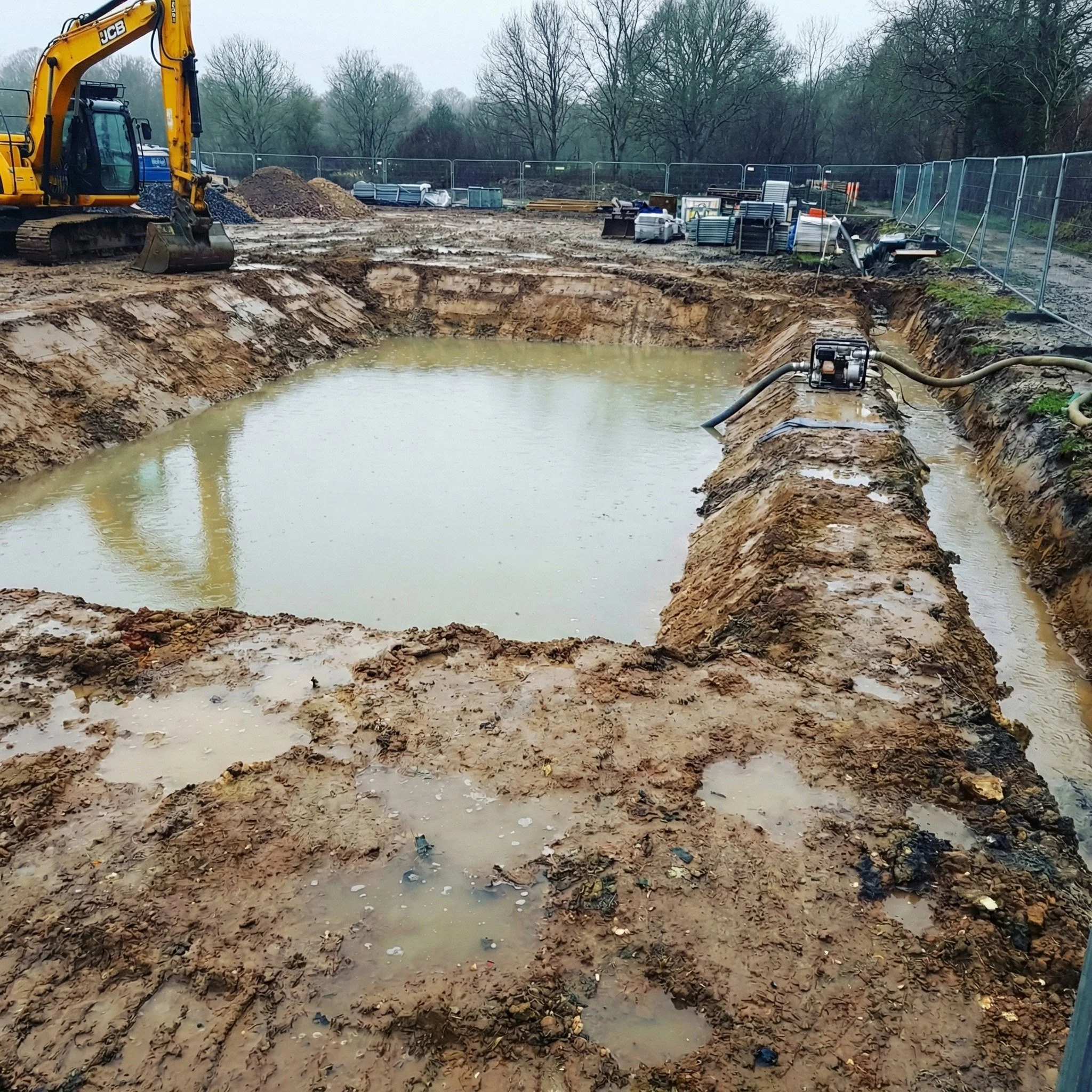
Pre-Construction Planning Part 2: What Happens After Construction Budgets Are Approved?
A practical insight for developers, consultants and client-side teams
In Part 1 of this series, we explored how early feasibility shapes construction risk before funding is confirmed.
Once construction budgets are approved, the project moves into a more defined stage of pre-construction planning.
At this point, flexibility begins to reduce. Scope is formalised, programmes are drafted and procurement decisions accelerate.
What happens immediately after budget approval determines whether early feasibility work translates into delivery certainty or whether unresolved risks are carried forward into mobilisation.
Moving from feasibility to structured pre-construction planning
Budget approval marks a shift in project momentum.
The focus moves from viability testing to delivery planning. This stage typically includes:
Confirming and refining project scope
Reviewing ground investigation data
Developing enabling works strategy
Aligning programme with site constraints
Preparing for contractor engagement and mobilisation
The transition from feasibility to structured planning is critical. If assumptions made during early stages are not validated against current information, they can become embedded into contract documents and delivery programmes.
Pre-construction planning should strengthen clarity, not simply accelerate activity.
Why budget approval is a high-risk transition point
There is often pressure to demonstrate visible progress once funding is secured.
Teams are appointed. Timelines are drafted. Commitments are made.
However, this acceleration can expose projects to assumption-led decisions, particularly where:
Ground investigation findings are incomplete or not fully interpreted
Groundwater behaviour has not been properly assessed
Enabling works requirements are underestimated
Environmental or contamination risks require further analysis
Site access and logistics are more constrained than initially assumed
At this stage, risks are less visible because delivery has not yet begun. Once mobilisation occurs, adjustments become more complex and commercially sensitive.
The period immediately following budget approval is therefore one of the most commercially important phases of the construction lifecycle.
Common pre-construction risks after budget approval
Projects are most vulnerable when early scope decisions are based on optimism rather than validated site data.
Scope confirmed before ground risk is fully understood
If ground investigation data is limited or not integrated into planning, foundation design and earthworks strategy may require revision later.
Unexpected ground conditions remain one of the most common causes of programme disruption.
Enabling works treated as secondary
Enabling works bridge the gap between approved funding and buildable site conditions. Delaying strategy definition can result in reactive sequencing and inefficiencies during mobilisation.
Programme assumptions based on ideal site conditions
Draft programmes that do not account for seasonal factors, regulatory requirements or remediation sequencing often require revision once works commence.
Addressing these risks during structured pre-construction planning protects both cost certainty and delivery confidence.
From approved budget to buildable construction scope
Turning an approved budget into a deliverable project requires disciplined validation of assumptions.
This stage should focus on:
Reviewing ground investigation reports in detail
Confirming groundwater management requirements
Identifying contamination and remediation implications
Defining enabling works sequencing
Aligning cost allowances with realistic site constraints
The objective is to convert financial approval into a buildable, risk-aware scope.
Projects that invest in this validation phase tend to enter mobilisation with stronger commercial control and fewer reactive adjustments.
The role of enabling works strategy after budget approval
Once budgets are confirmed, enabling works strategy should move from concept to defined plan.
This includes:
Site clearance and demolition sequencing
Service diversion coordination
Access and logistics planning
Ground preparation and earthworks sequencing
Integration of remediation measures
Embedding enabling works into structured planning reduces the likelihood of disruption once main works begin.
Churngold’s role in structured pre-construction planning
Churngold supports clients at this stage by translating approved budgets into practical, deliverable strategies.
Integrating ground investigation findings
We review ground and groundwater data to ensure that scope and sequencing reflect site realities.
Aligning enabling works with delivery strategy
Our enabling works capability allows early strategies to be shaped around access constraints, demolition requirements and ground preparation needs.
Supporting groundworks and earthworks planning
Practical input from our groundworks teams strengthens programme reliability and supports buildability.
Managing contamination and environmental risk
Where remediation is required, our expertise ensures early planning decisions align with proportionate risk management and regulatory compliance.
Early contractor involvement during this phase reduces uncertainty before mobilisation.
When to involve an enabling works and groundworks contractor after budget approval
Early engagement is particularly valuable where:
Budgets are confirmed but scope remains fluid
Projects are moving rapidly toward mobilisation
Brownfield or previously developed land is involved
Ground or groundwater risks are present
Enabling works will significantly influence sequencing
Involving delivery expertise during structured pre-construction planning supports smoother transition into construction.
Next in the pre-construction planning series
In Part 3, we examine the role of ground investigation and early site risk identification in strengthening construction planning before enabling works begin.