
CDM Regulations Explained: A Contractor’s Guide
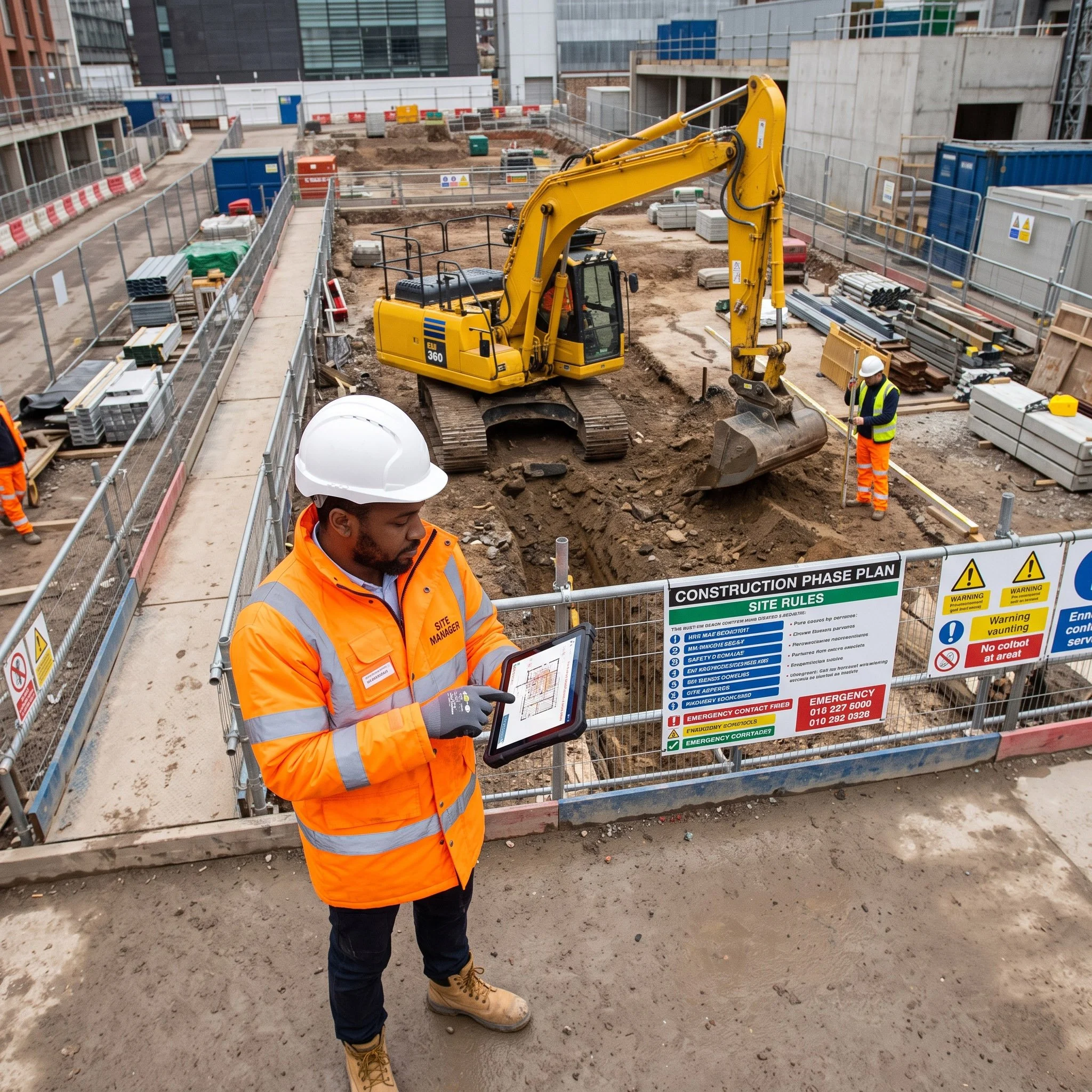
Every construction project in Great Britain falls under CDM. But the regulations are referenced far more often than they are understood, and the consequences of getting duties wrong land on the people who signed the contract, not the people who drafted the health and safety policy.
This guide explains the Construction (Design and Management) Regulations 2015 from a contractor’s perspective: what the regulations require, who is responsible for what, and what it looks like in practice on a live construction site.
What are CDM regulations?
The Construction (Design and Management) Regulations 2015, commonly known as CDM 2015, are the main set of regulations for managing health and safety on construction projects in Great Britain. They replaced the earlier CDM 2007 regulations and apply to all construction work, regardless of project size.
CDM 2015 places legal duties on five categories of duty holder: clients, principal designers, designers, principal contractors, and contractors. The regulations are enforced by the Health and Safety Executive (HSE), and failure to comply can result in enforcement action, prosecution, and significant fines.
The purpose of CDM is not to generate paperwork. It is to ensure that health and safety is considered at every stage of a construction project, from initial design through to completion and handover. The regulations require duty holders to plan, manage, and coordinate their work so that risks are identified early and managed throughout the project.
The five CDM duty holders
CDM 2015 defines five duty holders, each with specific responsibilities. On smaller projects with a single contractor, the client, designer, and contractor roles still apply. On larger projects with more than one contractor, the client must also appoint a principal designer and a principal contractor.
| Duty Holder | Key Responsibilities | When Appointed |
|---|---|---|
| Client | Makes suitable arrangements for managing the project. Ensures adequate time and resources. Provides pre-construction information. Appoints principal designer and principal contractor on multi-contractor projects. | Automatic. Anyone for whom construction work is carried out. |
| Principal Designer | Plans, manages, monitors, and coordinates health and safety in the pre-construction phase. Identifies, eliminates, and controls foreseeable risks. Prepares and updates the health and safety file. | Appointed by the client on projects with more than one contractor. Must be appointed before the construction phase begins. |
| Designer | Eliminates foreseeable risks through design where possible. Reduces and controls remaining risks. Provides information about residual risks to other duty holders. | Applies to anyone who prepares or modifies a design for a structure. No formal appointment required. |
| Principal Contractor | Plans, manages, monitors, and coordinates health and safety during the construction phase. Produces and updates the construction phase plan. Coordinates cooperation between contractors. Ensures site rules are established and followed. | Appointed by the client on projects with more than one contractor. Must be appointed before the construction phase begins. |
| Contractor | Plans, manages, and monitors own work and that of workers under their control. Cooperates with the principal contractor. Reports obvious risks. | Applies to all contractors carrying out construction work. No formal appointment required. |
The table above summarises the key responsibilities. In practice, the boundaries between these roles are not always obvious, particularly on projects where contractors are involved early in the design process or where design responsibilities are shared under design and build contracts.
What does CDM mean to contractors
Every contractor on a construction project has duties under CDM 2015, whether or not they are appointed as the principal contractor. The core contractor duties are:
Plan, manage, and monitor their own work and the work of anyone under their control to ensure it is carried out without risks to health and safety
Ensure that workers under their control have the right skills, knowledge, training, and experience for the work they are doing
Provide appropriate supervision, instructions, and information to workers
Not begin work on a construction site unless satisfied that welfare facilities are available
Cooperate with the principal contractor, other contractors, and the principal designer
Report anything likely to endanger health or safety to the principal contractor
For a specialist groundworks, earthworks, and civil engineering contractor, these duties apply across every activity on site, from excavation and earthworks through to drainage installation and temporary works. The CDM obligations sit alongside other regulatory requirements, including the Confined Spaces Regulations, the Work at Height Regulations, and the Control of Substances Hazardous to Health Regulations, which apply to specific activities within the construction programme.
The role of the principal contractor
The principal contractor is appointed by the client on any project involving more than one contractor. Their role is to plan, manage, monitor, and coordinate health and safety during the construction phase. In practice, this means:
Producing and maintaining the construction phase plan
Establishing site rules and ensuring all contractors follow them
Coordinating cooperation between contractors so that the work of one does not create risks for others
Ensuring suitable welfare facilities are provided and maintained
Consulting and engaging with workers on health and safety matters
Managing the flow of information between duty holders
The principal contractor does not take on the duties of other contractors. Each contractor retains their own CDM obligations. The principal contractor coordinates the overall approach and ensures the systems are in place for safe working across the site.
Key CDM documents
1. Pre-construction information
Pre-construction information is provided by the client to every designer and contractor appointed to the project. This includes information about the site, existing structures, previous uses, ground conditions, hazardous materials, and any other factors that could affect health and safety during the construction phase. On brownfield sites, this typically includes ground investigation reports, contamination assessments, asbestos surveys, and UXO risk assessments.
The quality of the pre-construction information directly affects the quality of the planning that follows. Incomplete or late pre-construction information is one of the most common causes of CDM non-compliance on construction projects.
2. Construction phase plan
The construction phase plan is produced by the principal contractor (or the contractor on single-contractor projects) before the construction phase begins. It sets out the health and safety arrangements for the works, including:
A description of the project and the key health and safety risks
The management structure and responsibilities
Site rules and arrangements for access, welfare, emergency procedures, and waste management
Specific health and safety measures for particular activities (excavations, temporary works, lifting operations, working near services)
Arrangements for monitoring, review, and consultation with workers
The construction phase plan is a live document. It is updated as the project progresses and as new risks are identified or circumstances change.
3. Health and safety file
The health and safety file is assembled by the principal designer during the project and handed to the client on completion. It contains information that will be needed for future construction work on the completed structure, including as-built drawings, details of buried services and structural forms, information about hazardous materials, and maintenance and operational requirements.
The file is not a record of the construction process. It is a document designed to protect people who work on the building in the future.
When does CDM apply?
CDM 2015 applies to all construction work in Great Britain, from domestic extensions to major infrastructure projects. However, the level of duty varies depending on the project type and scale.
All construction projects:
Client, designer, and contractor duties apply
A construction phase plan must be produced
Projects with more than one contractor:
The client must appoint a principal designer and a principal contractor
The principal contractor coordinates health and safety during the construction phase
Notifiable projects:
A project is notifiable if the construction phase lasts longer than 30 working days with more than 20 workers on site at any one time, or exceeds 500 person days of construction work
The client must notify the HSE before the construction phase begins
The F10 notification must be displayed on site
Most of the projects Churngold works on are notifiable. Enabling works, groundworks, earthworks, and civil engineering packages on development sites typically exceed both the duration and worker count thresholds.
How Churngold manages CDM compliance
CDM compliance is built into how we plan and deliver work, not treated as an administrative overlay. In practice, this means:
Construction phase plans are produced before mobilisation and updated throughout the works
Site-specific risk assessments and method statements (RAMS) are prepared for every activity
Daily briefings cover the tasks, hazards, and controls for each shift
Temporary works are designed to BS 5975 and independently checked before installation
Welfare facilities are planned and confirmed before the first operative arrives on site
Near-miss and incident reporting is active across all sites
When to involve us
CDM duties start long before the first excavator arrives on site. If you are planning a construction project that involves groundworks, earthworks, enabling works, or civil engineering, early contractor involvement helps you meet your CDM duties as a client and ensures the construction phase plan reflects the actual site conditions and programme.
Whether you need a principal contractor for a multi-contractor site or a specialist subcontractor for an enabling works or groundworks package, understanding CDM obligations early means fewer surprises, fewer delays, and a safer site for everyone.
Frequently Asked Questions
What are CDM regulations?
The Construction (Design and Management) Regulations 2015, known as CDM 2015, are the main regulations for managing health and safety on construction projects in Great Britain. They place legal duties on clients, designers, principal designers, principal contractors, and contractors to plan, manage, and coordinate work so that risks are controlled throughout the project.
When do CDM regulations apply?
CDM 2015 applies to all construction work in Great Britain, regardless of project size. The level of duty increases with the scale and complexity of the project. Projects with more than one contractor require a principal designer and principal contractor. Notifiable projects must be reported to the HSE before the construction phase begins.
What is a CDM principal contractor?
The principal contractor is responsible for planning, managing, monitoring, and coordinating health and safety during the construction phase on projects with more than one contractor. They produce the construction phase plan, establish site rules, and ensure cooperation between all contractors working on site.
What is the difference between a principal contractor and a contractor under CDM?
A contractor carries out or manages construction work. The principal contractor has overall responsibility for health and safety coordination during the construction phase on projects with more than one contractor. Every project has contractors, but only multi-contractor projects require a principal contractor. A contractor can also be appointed as the principal contractor.
What are the client’s duties under CDM 2015?
Clients must make suitable arrangements for managing the project, ensure adequate time and resources are allocated, appoint a principal designer and principal contractor on projects with more than one contractor, provide pre-construction information, and ensure a health and safety file is prepared for the completed project.
What is a construction phase plan?
The construction phase plan sets out the health and safety arrangements for the construction phase of a project. It is produced by the principal contractor (or the contractor on single-contractor projects) before the construction phase begins. It covers site rules, specific health and safety measures, and how risks will be managed throughout the works.
What is a CDM health and safety file?
The health and safety file is a document containing information about the completed structure that will be needed for future construction work, including cleaning, maintenance, refurbishment, and demolition. It is assembled by the principal designer during the project and handed to the client on completion.
What is a notifiable project under CDM?
A project is notifiable if the construction phase is expected to last longer than 30 working days and have more than 20 workers on site at any one time, or exceed 500 person days of construction work. Notifiable projects must be reported to the HSE before the construction phase begins.
Talk to our team
Planning a project and need a contractor who understands CDM from the ground up? Whether you need a principal contractor for a multi-contractor site or a specialist subcontractor for an enabling works package, we can help you plan and deliver the construction phase safely and compliantly. Get in touch to discuss your project.